By Maung Solaiman Shah
The Rohingya crisis in Malaysia cannot be understood without Myanmar. Behind the headlines, online hate, and detention centres lies a deeper story of statelessness, persecution, and survival.
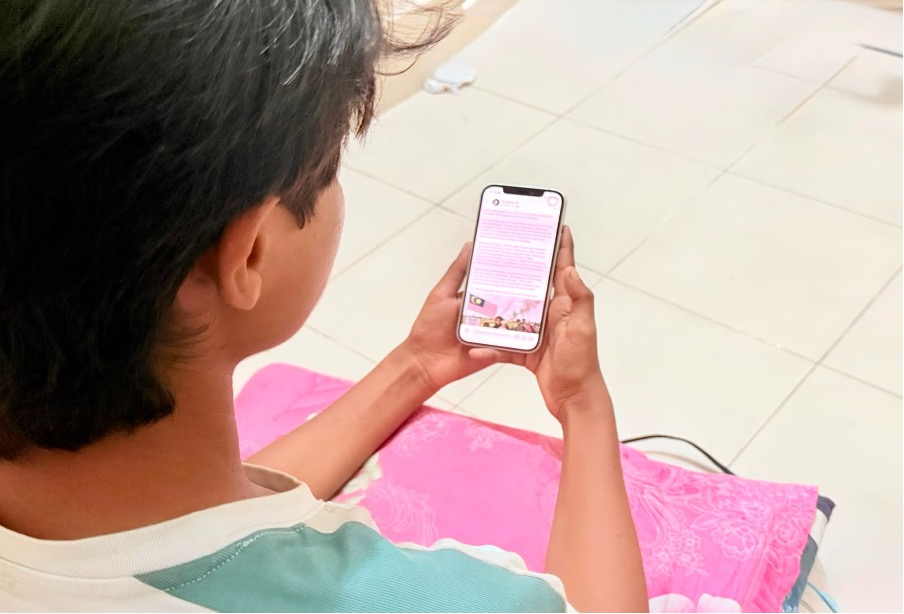
For many Malaysians today, the word “Rohingya” evokes controversy. Social media platforms are filled with accusations, stereotypes, and heated debates about refugees. News headlines often focus on arrests, crime allegations, or immigration raids involving Rohingya communities. In recent years, online hostility toward Rohingya refugees has become increasingly visible, shaping public opinion and influencing policy discussions.
Yet the story of the Rohingya in Malaysia did not begin on Malaysian shores. To understand why thousands of Rohingya live in Malaysia, why many are detained, and why anti-Rohingya sentiment has grown, one must first understand the root cause of the crisis: systematic exclusion and persecution in Myanmar.
The Rohingya are a predominantly Muslim ethnic minority from Myanmar’s Rakhine State. For decades, they have faced discrimination, restrictions on movement, barriers to education and healthcare, and denial of citizenship. The 1982 Citizenship Law effectively rendered most Rohingya stateless, stripping them of legal recognition in the country they had called home for generations. International human rights organisations, including Amnesty International, have described Myanmar’s treatment of the Rohingya as a system resembling apartheid, characterised by segregation and institutionalised discrimination. The roots of today’s refugee crisis lie in these policies, not in Malaysia.
The situation deteriorated dramatically in 2017 when Myanmar’s military launched what it described as “clearance operations” in northern Rakhine State. Villages were burned, civilians were killed, and widespread reports of sexual violence emerged. More than 700,000 Rohingya fled to neighbouring Bangladesh in one of the largest refugee exoduses in recent history. Today, international courts continue to examine allegations of genocide and crimes against humanity related to these events.
For many Rohingya, however, Bangladesh was never intended to be a permanent destination. Facing overcrowded refugee camps, limited educational opportunities, and uncertain futures, many sought safety and livelihoods elsewhere. Malaysia became a preferred destination due to its Muslim-majority population, established Rohingya communities, and relative economic opportunities.
Today, Malaysia hosts approximately 181,000 refugees and asylum seekers registered with the United Nations High Commissioner for Refugees (UNHCR), and more than 100,000 of them are Rohingya. Despite this significant population, Malaysia is not a signatory to the 1951 Refugee Convention and lacks a domestic legal framework recognising refugee status. As a result, refugees and asylum seekers are often treated under immigration law in the same manner as undocumented migrants.
This legal reality is central to understanding many of the challenges Rohingya face in Malaysia. Without formal recognition, most cannot legally work, access public education, or enjoy stable legal protection. Many survive through informal employment, making them vulnerable to exploitation, arrest, and detention. Refugees often live in a state of uncertainty, unable to fully integrate yet unable to return home safely.
Detention has become one of the most troubling aspects of Malaysia’s refugee policy. Human Rights Watch reports that thousands of migrants and refugees, including Rohingya, are held in immigration detention centres, sometimes for extended periods. Humanitarian organisations have raised concerns about overcrowding, limited oversight, and inadequate living conditions. Since refugees are not legally recognised under Malaysian law, even individuals fleeing persecution may find themselves detained despite holding UNHCR documentation.
At the same time, it is important to acknowledge that Malaysian public attitudes toward the Rohingya are complex and evolving. When large numbers of Rohingya began arriving in previous decades, many Malaysians expressed solidarity, particularly on religious and humanitarian grounds. Civil society organisations, volunteers, and ordinary citizens provided assistance, education, and support.
However, public sentiment shifted over time. Economic pressures, concerns about irregular migration, misinformation, and isolated incidents involving members of the refugee community have contributed to growing resentment. Social media amplified these tensions, particularly during the COVID-19 pandemic, when anti-Rohingya rhetoric surged online. Refugees increasingly became targets of xenophobic narratives portraying them as security threats, economic burdens, or people unwilling to integrate.
The problem with such narratives is that they often generalise the actions of individuals to an entire population. More importantly, they frequently ignore the structural conditions under which Rohingya refugees live. When people are denied legal employment, education, and long-term security, social problems become more likely, not because of ethnicity, but because of exclusion. Research and refugee advocacy organisations have repeatedly emphasised that marginalisation creates vulnerabilities that affect both refugee communities and host societies.
Online hate has played a particularly significant role in shaping perceptions. Around the world, digital platforms have been used to spread misinformation about Rohingya communities. Social media algorithms have previously been criticised for amplifying anti-Rohingya content in Myanmar, contributing to an environment where hatred could flourish. Researchers studying online hate speech have similarly found that fear-based narratives and misinformation often spread rapidly, influencing public attitudes toward marginalised communities.
In Malaysia, online discussions about the Rohingya often feature accusations that are difficult to verify, emotional rhetoric, and broad stereotypes. Genuine concerns about public policy become intertwined with prejudice, making constructive dialogue increasingly difficult. The result is a cycle in which refugees are viewed primarily through the lens of controversy rather than as human beings who have survived one of the world’s most severe human rights crises.
This does not mean that challenges associated with refugee management should be ignored. Host communities have legitimate concerns about resources, public services, and immigration governance. Governments have a responsibility to ensure public order and effective migration management. However, these concerns should be addressed through evidence-based policies rather than hostility toward an entire population.
Ultimately, the Rohingya crisis in Malaysia is not fundamentally a Malaysian problem. It is the consequence of a decades-long failure to resolve the underlying injustice in Myanmar. Statelessness, persecution, and displacement created the conditions that forced Rohingya families to flee in the first place. Detention, poverty, and social stigma in Malaysia are symptoms of that larger crisis.
Until the root causes in Myanmar are addressed, through accountability, restoration of rights, and meaningful pathways to citizenship, Rohingya refugees will remain trapped between countries: unwanted in the land they fled, and uncertain in the countries where they seek safety.
The conversation in Malaysia should therefore move beyond blame and stereotypes. The real question is not why Rohingya refugees are here. The real question is why, after decades of persecution, they still have nowhere they can safely call home. As a Rohingya human rights advocate and research analyst, I have seen how statelessness transforms from a legal condition into a lifetime of uncertainty, discrimination, and displacement. The Rohingya did not choose exile; exile was forced upon them. Until Myanmar addresses the systemic denial of Rohingya rights and citizenship, refugees will continue to seek safety elsewhere, and host countries will continue to confront the consequences of a crisis they did not create.
Maung Solaiman Shah is a Rohingya human rights activist, writer, and founder of Youth Led Initiative (YLI), currently based in Bangladesh. His work focuses on statelessness, refugee rights, and youth-led advocacy, and he is dedicated to amplifying voices from displaced communities. His writing explores structural injustice and pathways toward rights-based solutions.


